Sunj Beach
4.5 / 5 Island Bay in Lopud, Dubrovnik Riviera, Croatia
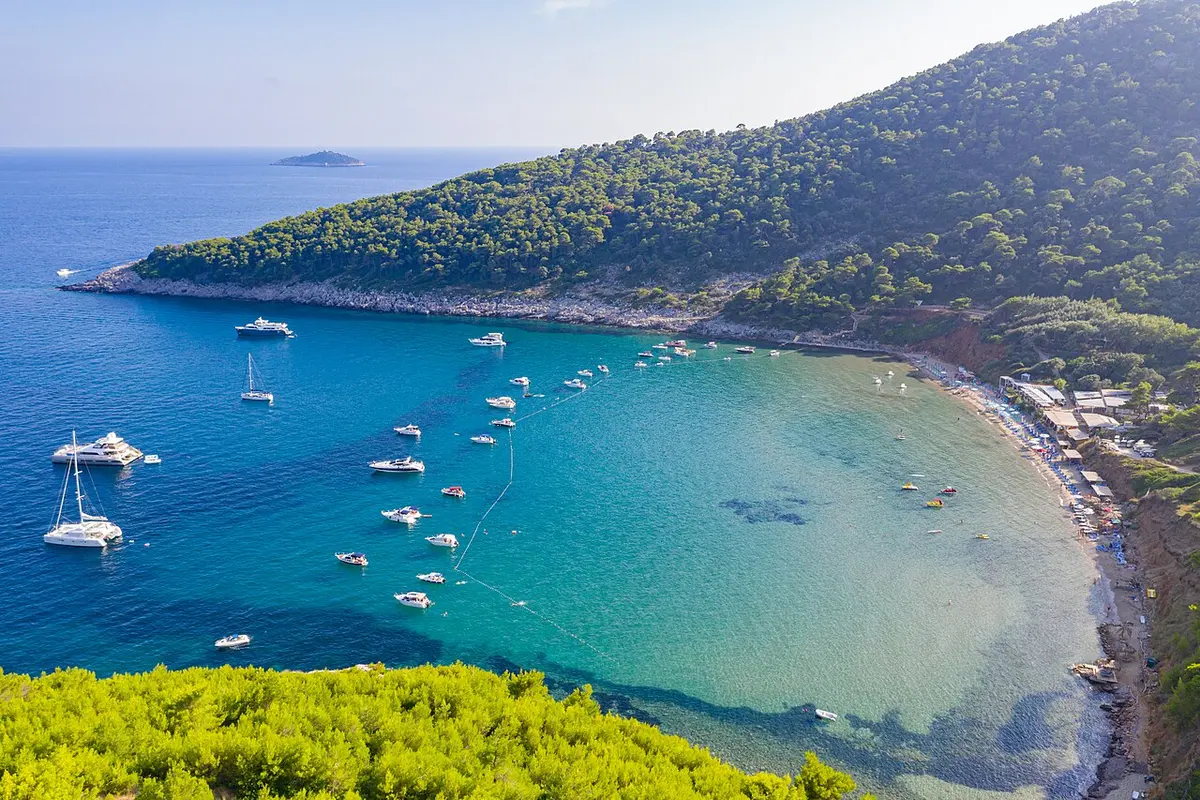
Photo: dronepicr, CC BY 2.0, via Wikimedia Commons

A shallow crescent of sand about 200 metres long, backed by pines on the car free island of Lopud, a rare sandy beach near Dubrovnik.
Practical info for Sunj Beach
| Access | Ferry from Dubrovnik (Gruz) to Lopud harbour, then 20-45 min walk or EUR 3 golf-buggy |
|---|---|
| Car parking | No cars on Lopud |
| Sunbeds & umbrellas | Paid via bars: about EUR 10 per bed full day (reviews) |
| Food & drink | Beach bars along the back of the beach (party spot); bring own water to save |
| Toilets & showers | Public toilet at Beach Bar Sunj; open shower EUR 1 |
| Water shoes | Not needed. Sand beach; no rocks or urchins noted in our sources. |
| Nudism | Optional. Naturists use this beach or a part of it, so clothing is not required there. Check local signs and be discreet. |
| Good to know | Ferry fare about EUR 10 (old listing); check Jadrolinija. |
Last verified: October 2026. Compiled from official tourism pages, visitor guides and recent reports. Prices, fees and rules change by season, so confirm locally before you go. Details are compiled from public sources and may be out of date, so local rules and signs always take priority. EuroShores accepts no liability for errors.
Planning your visit to Sunj Beach
The approach is moderate, with a short walk or rough ground, so sensible footwear and water are a good idea.
Related guides: Best Time to Visit Each Country · Budget Beach Holidays in Europe · Best beaches in Dalmatia
Featured in: Best Beaches with Sunbeds in Croatia · Best Sandy Beaches in Croatia · Best Sandy Beaches in Dalmatia · Best Beaches with Sunbeds in Dalmatia · Best Beaches in Croatia in June · Beach finder
View Sunj Beach on the map · Compare with all beaches
Best months to visit Sunj Beach
The swimming season here runs from June to September. July, August are the warmest and busiest, with the sea around 24 °C, so arrive early for parking and a good spot. June and September are quieter and cooler: good for walking and photos, though some beach bars and lifeguard posts may not be open yet or may already have closed for the year.
Average sea temperature by month (°C)
| Jan | Feb | Mar | Apr | May | Jun | Jul | Aug | Sep | Oct | Nov | Dec |
|---|---|---|---|---|---|---|---|---|---|---|---|
| 14 | 14 | 14 | 15 | 19 | 23 | 25 | 26 | 24 | 21 | 18 | 16 |
The sea is at 21 °C or warmer, comfortable for most swimmers, from June to October. The warmest month is August (about 26 °C) and the coolest is January (about 14 °C).
Average sea surface temperature for 1991–2020 at the nearest offshore point, from NOAA OISST v2.1 (NOAA Physical Sciences Laboratory). Water at the shore can be a degree or two warmer in shallow, sheltered bays and cooler where winds or currents bring up cold water.
Who Sunj Beach suits
Sand makes it comfortable for sunbathing, building sandcastles and long walks along the water line. Expect a short walk or uneven ground, so it suits most visitors with sensible footwear. Food and drink close by make it easy to stay for the whole day.
Getting there and nearby
There are no cars on the island. Take the Elaphiti ferry from Gruz harbour in Dubrovnik (about 45 minutes), then walk 25 to 30 minutes through the forest or take a golf cart taxi in season. Use the map link above for directions. If you are planning a day around it, the closest other beaches on our list are Donje Celo Beach, Kolocep (4 km), Sjekirica Beach, Brsecine (5 km), Copacabana Beach, Dubrovnik (10 km).
Frequently asked questions
When is the best time to visit Sunj Beach?
Sunj Beach is best visited June to September. On average the sea is warmest in August, at about 26 °C, and coolest in January, at about 14 °C. Most visitors come as a day trip, so check the last ferry back before you settle in. The water stays shallow a long way out, which suits children.
How do I get to Sunj Beach?
Access is rated moderate. There are no cars on the island. Take the Elaphiti ferry from Gruz harbour in Dubrovnik (about 45 minutes), then walk 25 to 30 minutes through the forest or take a golf cart taxi in season.
Is Sunj Beach good for children?
Access is rated moderate, so check that it suits young children before you go. Our family guide lists easier options.
Is there parking at Sunj Beach?
No cars on Lopud. Fees and rules change, so confirm locally.
Are there sunbeds at Sunj Beach?
Paid via bars: about EUR 10 per bed full day (reviews). Prices are approximate and change by season.
Do you need water shoes at Sunj Beach?
Not needed. Sand beach; no rocks or urchins noted in our sources.
Is nudism allowed at Sunj Beach?
Optional. Naturists use this beach or a part of it, so clothing is not required there. Check local signs and be discreet.
Been to Sunj Beach? Share a tip
Beaches near Sunj Beach
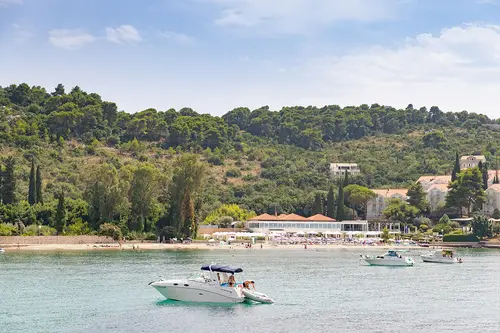
Donje Celo Beach, Kolocep
Donje Celo, Kolocep, Elaphiti Islands · 4.4 / 5 · 4 km away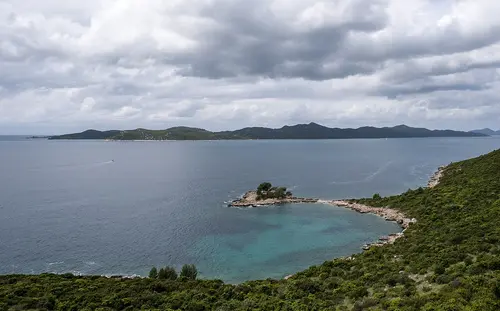
Sjekirica Beach, Brsecine
Brsecine, Dubrovnik coast · 4.4 / 5 · 5 km away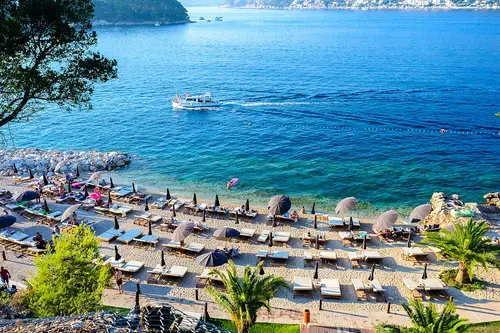
Copacabana Beach, Dubrovnik
Copacabana, Babin Kuk, Dubrovnik · 4.2 / 5 · 10 km away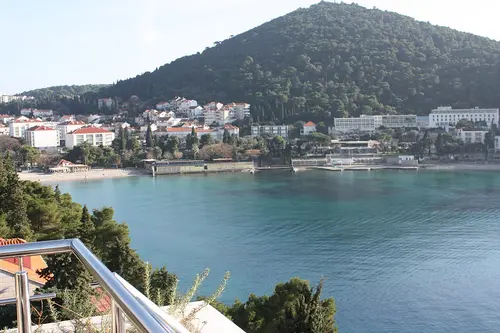
Lapad Beach
Dubrovnik, Dalmatia · 4.2 / 5 · 11 km away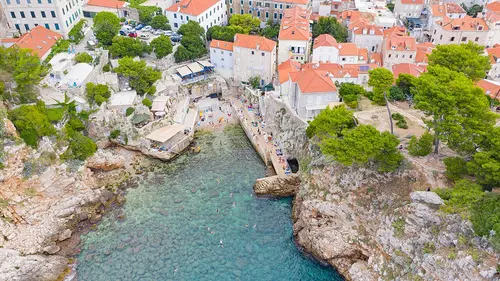
Suluci Beach
Dubrovnik, Croatia · 4.0 / 5 · 13 km away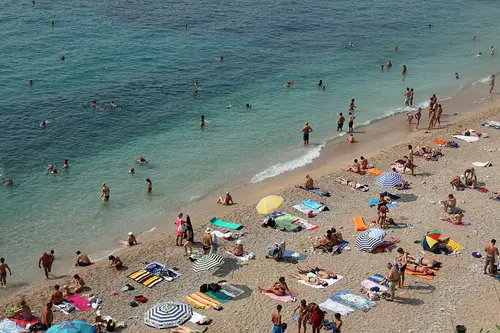
Banje Beach
Dubrovnik, Croatia · 4.4 / 5 · 14 km awayBrowse all beaches in Croatia or compare every beach.
Water quality: check the official EU bathing water report and the Blue Flag programme for the current status of this beach, because classifications change every year. See our guide to checking water quality.
Scores are editorial ratings from the EuroShores team, based on public tourism and visitor sources; see how to read a rating. Last updated 2026-11-25.