Praia da Falésia
4.7 / 5 Sandy Beach in Albufeira, Algarve, Portugal
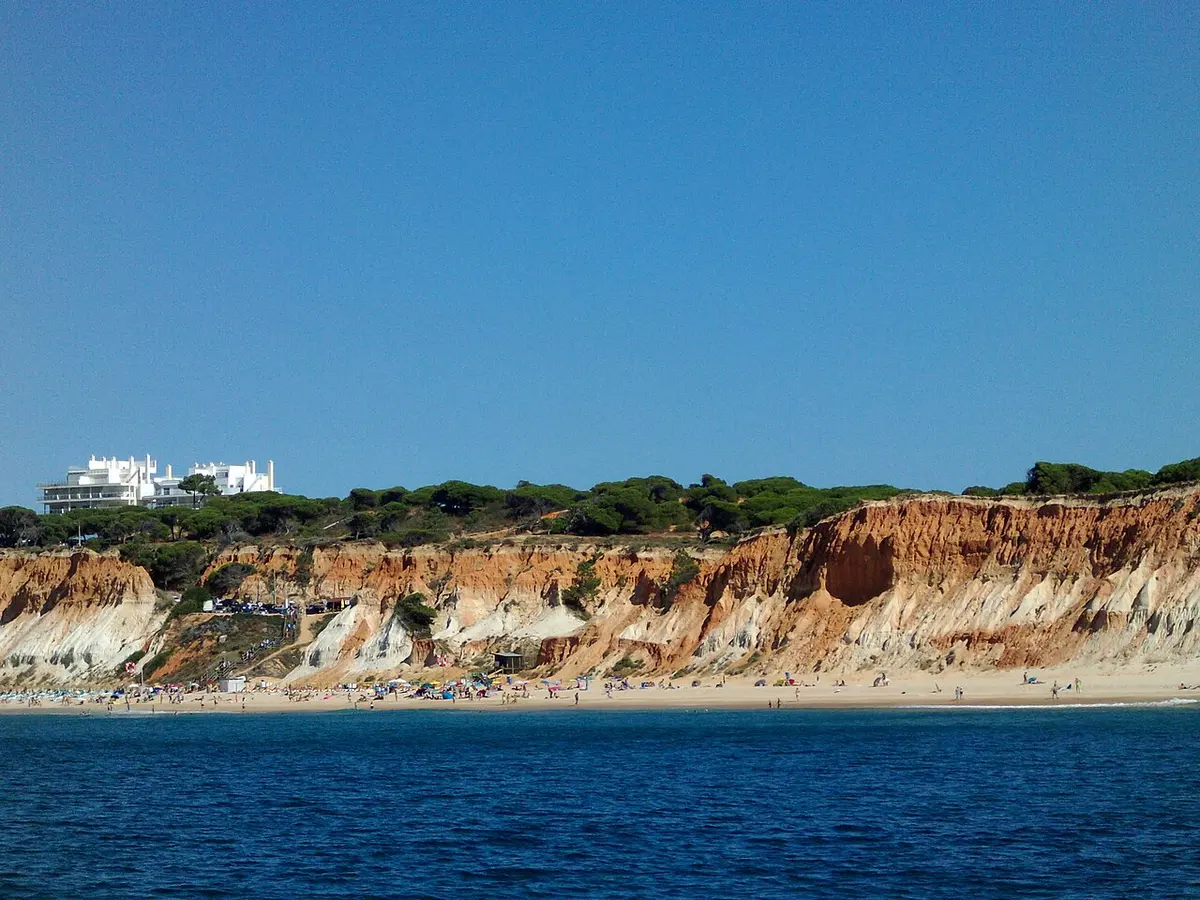
Photo: Diana5cruz, CC BY-SA 4.0, via Wikimedia Commons

A long golden beach backed by red and ochre cliffs and pine trees, stretching toward Vilamoura.
Practical info for Praia da Falésia
| Access | Long beach with several clifftop access points; stairs down to the sand |
|---|---|
| Car parking | Clifftop car parks, reported free but limited; they fill by afternoon in peak season |
| Sunbeds & umbrellas | Sunbed hire at the main access points |
| Food & drink | Restaurants and beach bars along the beach |
| Toilets & showers | Toilets reported along the beach; some sources say paid |
| Lifeguard | Supervised sections only (e.g. Olhos de Agua, Acoteias); season reported as roughly June-September |
| Water shoes | Useful. Sand beach; surf guide warns of urchins at the break. |
| Nudism | Forbidden. Clothing is expected; no naturist area is recorded for this beach in our sources. |
| Good to know | Reported Blue Flag beach. Confirm lifeguard dates and current facilities locally. |
Last verified: October 2026. Compiled from official tourism pages, visitor guides and recent reports. Prices, fees and rules change by season, so confirm locally before you go. Details are compiled from public sources and may be out of date, so local rules and signs always take priority. EuroShores accepts no liability for errors.
Before you go: what we checked
- Falesia is a continuous stretch of sand about 6 km long, between Olhos de Agua near Albufeira and Vilamoura.
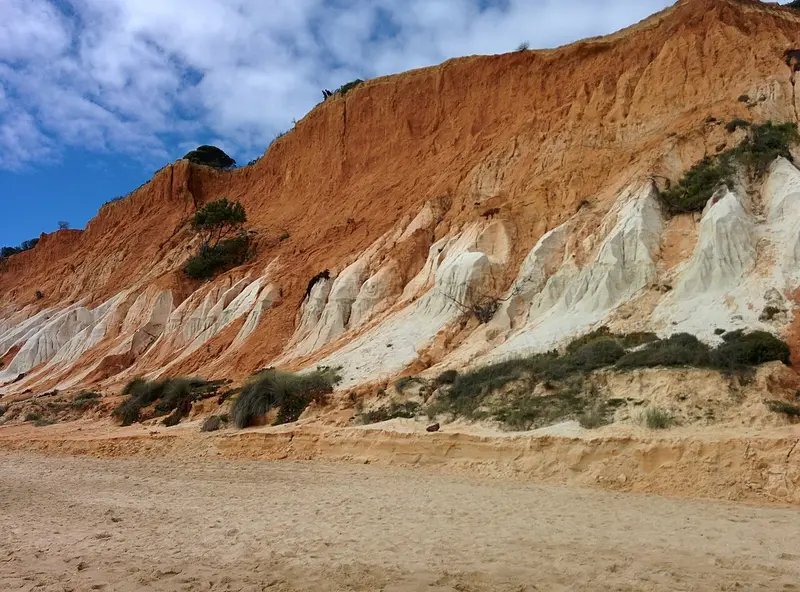
- The beach is backed by tall cliffs in shades of red, orange and white, topped by pine trees. The highest and most colourful cliffs are at the western end, near Olhos de Agua.
- It regularly holds the Blue Flag.
- Stay away from the foot of the cliffs and do not climb them: the sandstone erodes and pieces can fall.
- There are several access points with steps or ramps from the clifftop, each with its own car park and beach bars. Because the beach is so long, it is easy to find a quiet patch away from them.
Checked November 2026. Sources: Visit Portugal: Praia da Falesia, EuroVelo Portugal: Praia da Falesia. Rules and services change, so confirm locally before you travel.
Planning your visit to Praia da Falésia
Getting here takes a little effort: expect stairs, a short walk or an uneven track, and wear proper shoes rather than flip-flops.
Related guides: Best Time to Visit Each Country · Budget Beach Holidays in Europe · Best beaches in the Algarve
Featured in: Best Beaches with Sunbeds in Portugal · Best Beaches with Free Parking in Portugal · Best Sandy Beaches in Portugal · Best Sandy Beaches in the Algarve · Best Beaches with Sunbeds in the Algarve · Beach finder
View Praia da Falésia on the map · Compare with all beaches
Best months to visit Praia da Falésia
The season at Praia da Falésia stretches from May to October, with June, July, August, September the peak (sea about 21 °C). Early and late visits mean quieter sand and cooler water, and seasonal services may not yet be running.
Average sea temperature by month (°C)
| Jan | Feb | Mar | Apr | May | Jun | Jul | Aug | Sep | Oct | Nov | Dec |
|---|---|---|---|---|---|---|---|---|---|---|---|
| 16 | 15 | 15 | 16 | 17 | 19 | 20 | 21 | 21 | 20 | 18 | 17 |
The sea is at 21 °C or warmer, comfortable for most swimmers, from August to September. The warmest month is August (about 21 °C) and the coolest is February (about 15 °C).
Average sea surface temperature for 1991–2020 at the nearest offshore point, from NOAA OISST v2.1 (NOAA Physical Sciences Laboratory). Water at the shore can be a degree or two warmer in shallow, sheltered bays and cooler where winds or currents bring up cold water.
Who Praia da Falésia suits
The soft sand is good for lying out, playing with children and strolling along the shore. A short walk or uneven ground is part of the visit, which most people manage in sensible shoes. Food and drink close by make it easy to stay for the whole day.
Getting there and nearby
Several car parks along the clifftop, then stairs down (about 80 steps at the main entrance). Use the map link above for directions. If you are planning a day around it, the closest other beaches on our list are Praia dos Olhos de Agua (2 km), Praia da Marina, Vilamoura (5 km), Praia da Oura, Albufeira (5 km).
Frequently asked questions
When is the best time to visit Praia da Falésia?
Praia da Falésia is best visited May to October. On average the sea is warmest in August, at about 21 °C, and coolest in February, at about 15 °C. Walk away from the main access for quieter sand. Parking is tight in peak season, so arrive early.
How do I get to Praia da Falésia?
Access is rated moderate. Several car parks along the clifftop, then stairs down (about 80 steps at the main entrance).
Is Praia da Falésia good for children?
Access is rated moderate, so check that it suits young children before you go. Our family guide lists easier options.
Is there parking at Praia da Falésia?
Clifftop car parks, reported free but limited; they fill by afternoon in peak season. Fees and rules change, so confirm locally.
Are there sunbeds at Praia da Falésia?
Sunbed hire at the main access points. Prices are approximate and change by season.
Do you need water shoes at Praia da Falésia?
Useful. Sand beach; surf guide warns of urchins at the break.
Is nudism allowed at Praia da Falésia?
Forbidden. Clothing is expected; no naturist area is recorded for this beach in our sources.
Been to Praia da Falésia? Share a tip
Beaches near Praia da Falésia
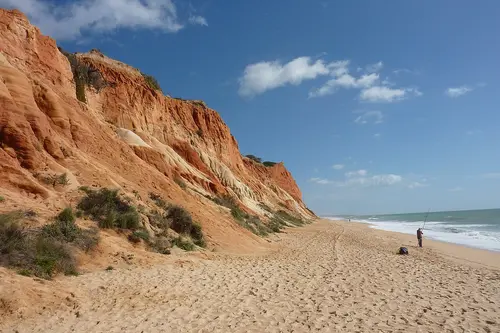
Praia dos Olhos de Agua
Olhos de Agua, Albufeira, Algarve · 4.4 / 5 · 2 km away
Praia da Marina, Vilamoura
Vilamoura, Algarve · 4.3 / 5 · 5 km away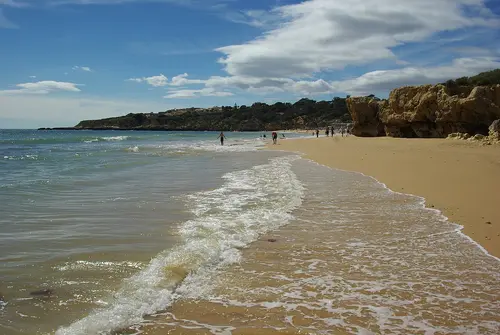
Praia da Oura, Albufeira
Albufeira, Algarve · 4.2 / 5 · 5 km away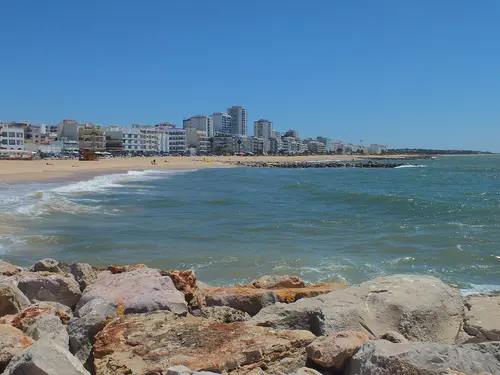
Praia de Quarteira
Quarteira, Algarve · 4.2 / 5 · 7 km away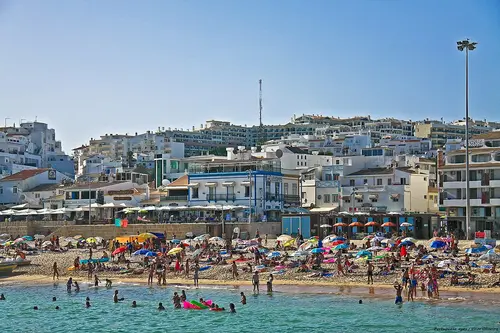
Praia dos Pescadores
Albufeira, Algarve · 4.2 / 5 · 7 km away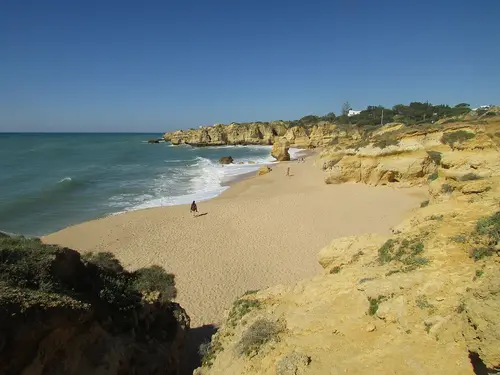
Praia de Sao Rafael
Albufeira, Algarve · 4.6 / 5 · 10 km awayBrowse all beaches in Portugal or compare every beach.
Water quality: check the official EU bathing water report and the Blue Flag programme for the current status of this beach, because classifications change every year. See our guide to checking water quality.
Scores are editorial ratings from the EuroShores team, based on public tourism and visitor sources; see how to read a rating. Last updated 2026-11-25.